

Skip to main content Scroll Top

The magical night of San Juan

The night of San Juan is vital throughout Spain and in other parts of the world such as South America, and dates back thousands of years.

Legend has it that fire drives away evil spirits and purifies the soul.

Tonight the beaches are filled with bonfires, music and people dancing around them.

The city's atmosphere is filled with hope and dreams.

It is a night full of happiness and magic, where we all put our best intentions at the hands of the sea, the sun and the horizon.

Noise, desire, firecrackers and chanting fill the night with din.

Origins of Midsummer Night

The night of San Juan is one of the most eagerly awaited of the year, and even though its origins are uncertain, In the case of the solar cults celebrated by different cultures for thousands of years.

To understand it better, we need to talk about the shortest night of the year, which is 21 June: In the ancient tribes there was a legend that the sun was in love with the earth and therefore refused to leave it. And that was the explanation they gave for the phenomenon of the summer solstice.

On that day, rituals were performed, fires were lit and preaching was done to obtain good harvests and ward off evil spirits.

Although a long time later, with the arrival of the Christianity a similar celebration began to take place three days later: the Bible tells us that Saint Zacharias, the husband of Saint Elizabeth, cousin of the Virgin Mary and mother of Saint John the Baptist, ordered a bonfire to be lit to announce the birth of his son.
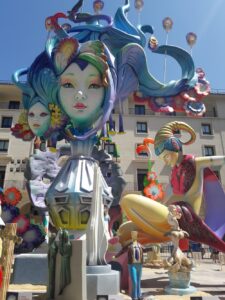
Figures or Ninots

San Juan today: the Bonfires of Alicante

This tradition has remained virtually intact to this day.
Although we have not always been fortunate enough to be able to celebrate it, has been persecuted for years, particularly in Alicante, where it the first official Nit del Foc was held in 1928. In the past, the party was persecuted by the politicians of the time, including a curfew.

And in this locality wanted to do something similar to the Fallas in Valencia: they create »ninots», dolls, beings, that symbolise some current issue or situation, many of which usually carry a message of social criticism. These are burnt, giving rise to bonfires.

In Alicante the festival is even more alive: it is a week where the sound, the good atmosphere and the party flood the streets, which are filled with colours, illusion and grace with their ninots.

And they say that this holiday has been re-paganised as the first festival of the summer solstice: What matters, what is celebrated is the arrival of summer, the longing for freedom and holidays, and the hope that everything will turn out well.

So the most common thing to do is to go to the beach, light your bonfire, have dinner with your loved ones and at 12 o'clock at night dip your feet in the water and make a wish.

Bonfires all over the peninsula

Although we are talking about the Valencian Community as the main axis of this celebration, in other parts of Spain live it in their own way: at Catalonia or the province of Valencia Not only are bonfires lit, but they are accompanied by the setting off of firecrackers and pyrotechnics. At Extremadura, and in the framework of its Festivity of the Moon to the Fire, the well-known «living chess» of Zafra is staged, while in Menorca a great equestrian show takes place. At Alicante the Bonfires of Alicante are celebrated, where ninots made for the occasion are burned, while in Andalusia they set fire to a dummy that in Cádiz is called Juanillo.

So if you are in Spain, enjoy this night of warmth and fascination full of illusion on the beach.

Do you already know where you are going to celebrate?

PS: In Valencia the Malvarrosa beach is the most crowded and unsafe if you go with your family, the best is to go to Patacona or Saler, try to leave the main beaches of the city as you will find a large congregation of people, and what we want is spirituality, liberation and tranquility.

Add Comment