


There’s one question that almost everyone who visits Valencia asks themselves sooner or later:
If there are oranges everywhere, why doesn’t anyone pick them from the trees in the street?
The short answer: because they’re probably not the oranges you’re expecting.
Many of the orange trees you see on the streets and in the gardens of Valencia are ornamental and produce bitter fruit that is not intended for consumption.
In 2026, the City Council withdrew more than 340,000 kilos from these oranges growing on trees in urban areas, to be used for composting.
The sweet oranges for which Valencia is famous have a different story to tell. And to really discover it, you have to head a few kilometres out of the city, towards La Ribera, and venture into the orchards. Because behind a fruit that today seems to be everywhere lies a history quite curious.
And it begins with a priest, an apothecary and a scribe.
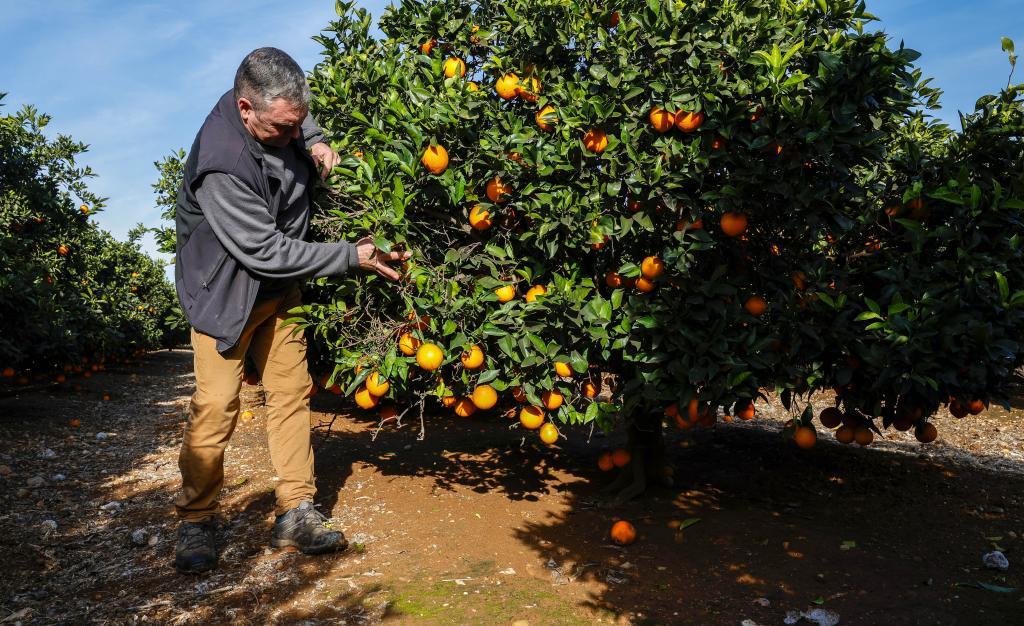
In winter, Valencia seems determined to remind you of one of its best-known fruits. There are orange trees in squares, along avenues and in gardens. You’ll also find them in some parts of the historic centre and scattered throughout numerous neighbourhoods. But to pick up one of those oranges thinking you’ve just found a free breakfast It doesn't usually end very well.
The trees used as street trees are mainly ornamental orange trees. Their fruit is more bitter and sour than table oranges and is not intended for consumption.
So, where are the famous Valencian oranges? Out in the countryside. And that’s where it gets interesting.
The priest, the apothecary and the scribe who transformed a region
You have to travel as far as Carcaixent, in the Ribera Alta, to understand an important part of this history. At the end of the 18th century, the orange tree had not yet come to dominate the region’s agricultural landscape as it would later do. It was not until 1781 Something happened.
A rector, an apothecary and a notary planted an orange grove in the Bassa del Rei area of Carcaixent with a very specific aim: to grow them for the fruit trade. The initiative proved successful. Other farmers began to follow suit, and the crop gradually spread, first throughout the region and then to other farming areas.
That episode is one of the reasons why Carcaixent still lays claim to the title of: “Bressol de la Taronja” — the birthplace of the orange.
Not bad for an idea that started with three neighbours who weren’t exactly farmers.
When oranges changed more than just the countryside
The success of the orange was not merely a matter of replacing some crops with others. Over the centuries 19th and 20th, the citrus trade became an economic activity fundamental for much of the Valencian region.
The orchards expanded, warehouses dedicated to fruit sorting and preparation sprang up, and transport links improved, making it possible to transport the oranges to other markets. And even today, traces of that era remain.
Houses, historic orchards, agricultural warehouses and Modernist buildings help to explain why the orange came to form part not only of the economy, but also of the landscape and of the identity in many towns in the Valencian region. That’s why visiting a vegetable garden makes much more sense when you know what you’re looking at.
They are not simply trees laden with fruit. They are part of a landscape that has existed for more than two centuries transforming around the citrus fruits.
Is it possible to visit an orange grove near Valencia?
Yes. And it’s probably the most interesting way to understand why this fruit is so closely associated with Valencia. About 40 minutes from the city, in the Ribera region of Valencia, you can visit a historic orange grove and stroll around the estate amongst different varieties of citrus fruit.
The Excursion to the Orange Grove with Valencia&Go It lasts around four and a half hours and includes return transport from Valencia, the official guide and the crazy guide… in the garden itself. But the interesting bit isn’t just taking a photo amongst the trees.
During the visit, you’ll discover how a vegetable garden, which varieties are grown depending on the time of year, and how an orange goes from being on a branch to being ready for distribution.
Visitors also get to see a historic estate in 1870, with its eclectic-style house, and you’ll learn about some of the processes involved in selecting, brushing, grading and packing citrus fruits. And, of course, you’ll have to try them.
The experience includes a tasting products made from citrus fruits and local produce, such as freshly squeezed orange juice, jams or orange blossom honey, as well as other products depending on the visit.
Is it worth visiting an orchard if you’re only in Valencia for a few days?
It depends on what sort of trip you’re on. If it’s your first time in Valencia and you’ve only got one day, it’s probably best to spend it on the the historic centre and to explore the city.
But if you have a few days to spare, have already seen the main sights, or are looking for a different sort of day trip without going too far, La Ribera is a great way to discover a part of Valencia that is usually off the beaten track.
It also works particularly well for:
families with children;
couples looking for a quiet night out;
travellers interested in gastronomy and local produce;
people who are already familiar with Valencia;
groups looking for something different to do outside the city.
And there’s something particularly delightful about the contrast. One morning you might be having a coffee right in the heart of Valencia, and less than an hour later, you could be walking amongst trees laden with citrus fruit.
Frequently Asked Questions
When is the orange season in Valencia?
It depends on the variety. The earliest varieties are harvested in autumn, whilst later ones continue into spring, with some being harvested as late as June.
Can you eat the oranges from the trees lining the streets of Valencia?
They are not the same sweet oranges that are sold for consumption. Urban orange trees are ornamental and produce bitter fruit, which the council removes regularly.
Why is Carcaixent known as the cradle of the orange?
Because in 1781, one of the first orange groves specifically intended for the commercial sale of the fruit was planted there, an initiative that was subsequently emulated by other farmers in the area.
Is it possible to visit an orange grove from Valencia?
Yes. There are day trips from Valencia to La Ribera where you can visit traditional orchards and learn about citrus cultivation. The Valencia&Go day trip includes transport, an official guide, a guided tour of the orchard and a tasting of local produce.
How long does the trip to the orange grove last?
The Valencia&Go experience lasts approximately 4 and a half hours and takes place in the Ribera region of Valencia, about 40 minutes from Valencia.
Visit an orange grove in Valencia
Would you like to find out about more things to do or day trips in Valencia? Book your day trip with Valencia & Go today! and explore the best of Valencia's surroundings. To keep up to date with the latest news, travel tips and inspiration, follow us on social media and stay up to date with what's new at Valencia & Go.